Written by Cody Ross
Northern News Network
A Mission to Prevent Collisions and Fatalities
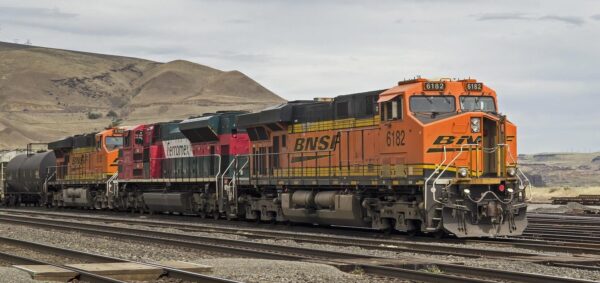
Railroad safety is a vital concern across Montana’s expansive landscapes, where open spaces can sometimes lull drivers and pedestrians into a false sense of security. To address this, Operation Lifesaver, a non-profit organization, works tirelessly to educate the public about the dangers around railroad crossings. According to John Althof, the Montana State Coordinator, “Our mission is simple: to help prevent collisions, injuries, and fatalities around railroad tracks and crossings. We work with schools, first responders, and rural communities to share rail safety information through presentations, community events, and media outreach efforts.” Established nationally in 1972, Operation Lifesaver has successfully reduced collisions by approximately 84% across the country, demonstrating the importance of ongoing education.
Common Misconceptions and Visual Illusions
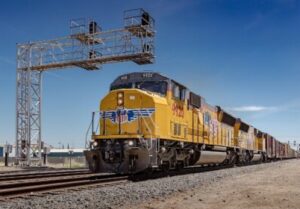
Montana’s wide-open spaces create visual illusions that can make trains seem farther away or appear to be moving more slowly than they actually are. Althof explains, “One of the biggest misconceptions is how easy it is to misjudge the train’s distance and speed. In Montana, where trains are large and visibility can be deceiving, people often underestimate how quickly a train can approach.” This misunderstanding underscores the importance of always obeying signals, using designated crossings, and never attempting to beat a train across the tracks. “Trying to outrun a train is extremely dangerous and not worth the risk,” he emphasizes. The organization encourages everyone to slow down, look both ways, and take a moment to ensure safety before crossing.
Educational Outreach and Safety Tools
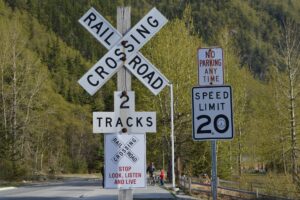
Educational outreach is central to Operation Lifesaver’s mission. They provide free presentations tailored to various groups, including school children, farm operators, and local communities. “We’ve gone to towns as small as Poplar and as large as Havre,” notes Althof, “and we’re always ready to come out and share our safety message.” The organization also places emphasis on accessible safety tools, such as the blue and white emergency notification signs found at crossings. These signs feature a unique identification number that allows people to report concerns directly to the railroad, enhancing safety and quick response. “Knowing where you are and reporting issues can prevent accidents and save lives,” he says.
Fostering a Culture of Vigilance and Responsibility
Ultimately, Operation Lifesaver aims to foster a culture of vigilance and respect around railroad crossings. “The key is awareness,” Althof states. “Railroads aren’t just tracks; they’re active transportation corridors, and safety is a shared responsibility.” By educating the public about actual train stopping distances—up to a mile for a 55 mph train— and debunking misconceptions, the organization strives to prevent accidents before they happen. Citizens are encouraged to request safety presentations for their communities or groups, helping to extend these vital safety messages across Montana’s diverse landscape. “Every effort counts when it comes to saving lives,” Althof concludes.