
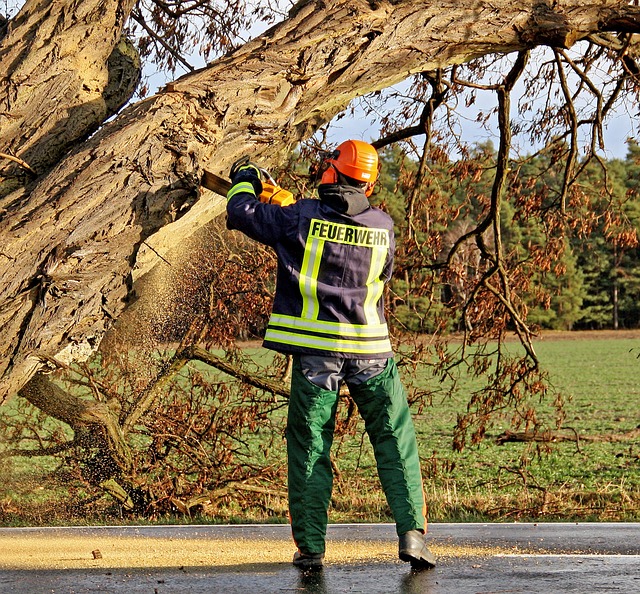
Trump Approves Emergency Declaration for Montana
President Donald Trump has approved an emergency declaration for Montana following severe storms across the state last week. Under the declaration, the Federal Emergency Management Agency can provide direct support for lifesaving operations, debris removal, sheltering, and other urgent needs. It also allows federal agencies to deploy personnel and equipment faster, helps cover emergency response costs, and can include waivers of certain rules to streamline relief efforts.
Montana Commerce Awards $3.4 Million in Grants to Boost Infrastructure in Five Communities
The Montana Department of Commerce has awarded over $3.4 million in Community Development Block Grants to five communities for critical water and wastewater infrastructure improvements. Funding allocations include $750,000 each for Ennis, Philipsburg, and Roundup, $734,612 for Darby, and $500,000 for Richey.
FWP Opens 1,500 Acres of Rosebud Mine for Late-Season Antlerless Elk Hunting Through February
Montana Fish, Wildlife & Parks (FWP) has partnered with Westmoreland Rosebud Mine to open 1,500 acres for late-season antlerless elk hunting through February 15. Hunters with valid licenses can obtain weekly access permits in person at the junction of Highway 39 and Castle Rock Road near Colstrip from 4:30 to 5:30 p.m., starting today. Permits are issued on a first-come, first-served basis by an FWP access technician. Each day, one party of up to four people can be granted access for that week, with permission given each Monday for the upcoming week. Contact the FWP for more details.
Montana State Employees Donate Record 10,500 Pounds of Food to Statewide Food Bank Network
Governor Greg Gianforte announced that Montana state employees donated nearly 10,500 pounds of food to the Montana Food Bank Network during the fifth annual interagency food drive, surpassing last year’s total of 7,500 pounds. The Department of Health and Human Services led the effort, contributing 9,505 items, as part of the governor’s 12 Days of Giving campaign. Continued support is possible at mfbn.org.
Judge Declines to Halt 2025–26 Montana Wolf Hunting and Trapping Seasons
District Court Judge Christopher Abbott has declined a petition from several pro-wolf and environmental groups seeking to halt Montana’s 2025–26 wolf hunting and trapping seasons, at least for now. In his ruling, Abbott wrote that the groups had not shown evidence that the state’s wolf population was “plummeting.” He also noted it is “likely” that the constitutional right to a clean and healthful environment includes the protection of a sustainable wolf population.
Montana Hunters Play Key Role in Chronic Wasting Disease Tracking
Montana Fish, Wildlife and Parks recently wrapped up its most productive chronic wasting disease monitoring season, thanks to strong participation from hunters across the state. Data collected from hunter-submitted samples helps track the disease’s spread and prevalence, ensuring the health of elk, deer, and moose herds. This year, hunters received CWD test results in an average of 7.6 days.
Montana Delegation Urges Airlines to Boost Flights to Nashville Ahead of FCS Championship
Senator Steve Daines, along with the rest of Montana’s congressional delegation, has sent a letter to major airline executives urging them to increase flight options from Montana to Nashville, Tennessee, ahead of the FCS National Championship Game on January 5. The Montana State University Bobcats will be heading to Nashville, creating a surge in travel demand.
Controversial National Wildfire Service Could Launch in January
The newly created United States Wildland Fire Service was expected to become operational on January 12 to strengthen interagency coordination, modernize capabilities, and elevate the profession of wildland firefighting. So far, however, Congress has refused to fund the plan, though that could change through last-minute budget maneuvers. The Wildland Fire Service was among President Donald Trump’s early initiatives in his second term.
More Headlines:
Due to re-evaluations by the Department of Revenue required under House Bill 231, Yellowstone County property owners will be re-billed for the second half of 2025 property taxes to reflect adjustments in property values. According to the Big Sky Business Journal, 14 county levies must also be adjusted.
Bitterroot National Forest officials have publicly released the draft initial plan of operations for the Sheep Creek Project, a proposed exploratory mine for rare-earth metals. Federal officials have kept the project on the Fast-41 list, a nationwide list of mining projects prioritized for quicker approval.
Columbia Falls School District Superintendent Cory Dziowgo and district staff recently presented a proposal to the Montana Board of Public Education for a new Columbia Falls Trades Academy. The academy would build on an already robust trades program that has partnered with Glacier National Park for several years. The district hopes to expand the program to the former Canyon Elementary School campus.
The Executive Committee of the Great Falls Development Alliance has approved a Brownfields subgrant of up to $266,664. The funding will help support a local nonprofit organization with cleanup costs tied to redeveloping a vacant upper-floor building in downtown Great Falls to create a much-needed community service.
Montana ranks among the lowest states in the nation for internet access. BroadbandNow, an independent research organization, ranks Montana second-to-last for internet speeds and affordability. Rural areas disproportionately lack high-speed connectivity compared to urban areas, highlighting the ongoing digital divide.


