
As tensions escalate between Iran, Israel and the United States, a University of Montana scholar says the most important questions may not be about military conflict but whether the Iranian people could ultimately overthrow their oppressive government.
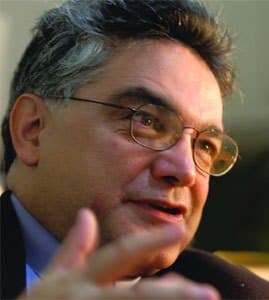
Mehrdad Kia, director of the Central and Southwest Asian Studies Center at the University of Montana, discussed the situation during a recent appearance on “Voices of Montana with Tom Schultz.”
The conflict intensified Feb. 28 with coordinated U.S. and Israeli strikes targeting Iran’s military and nuclear infrastructure. Iran responded with missile and drone attacks aimed at U.S. and allied targets across the Persian Gulf region, including Qatar, United Arab Emirates, Oman, Bahrain and Kuwait.
But Kia said the long-term outcome may depend more on internal political pressure inside Iran than on battlefield developments.
“The real issue is whether the Iranian people can bring about regime change,” Kia said.
Islamic regime responds violently to protests
Iran has been governed by the Islamic Republic since the Iranian Revolution. Kia said the current leadership faces growing dissatisfaction among citizens after decades of political repression and economic decline.
Earlier this year, widespread protests erupted across Iran, drawing millions into the streets to demand political change. According to various reports cited by Kia, the government responded with a violent crackdown that resulted in up to 40,000 deaths and mass arrests.
Despite the repression, he said many Iranians — both inside the country and around the world — support fundamental political change.
“The overwhelming majority of Iranians want the regime to go,” Kia said.
Transitional leader emerges
Kia also said many opposition supporters have rallied around Reza Pahlavi, the son of Iran’s last monarch, who has positioned himself as a potential transitional leader if the current government collapses. Pahlavi has said his role would be temporary and focused on guiding the country toward free elections.
Kia emphasized that any new government must ultimately be chosen by the Iranian people to maintain legitimacy.
“The less it looks like an outside power imposed a leader, the stronger that government will be,” he said.
The future of Iran remains uncertain, with several possible outcomes ranging from regime collapse to prolonged conflict or internal reform.
Kia said many Iranians hope international pressure combined with domestic opposition could eventually lead to a democratic transition.
“People want a government that cares about its citizens instead of funding wars and terrorism,” he said.
By: Tom Schultz
Voices of Montana Host


