
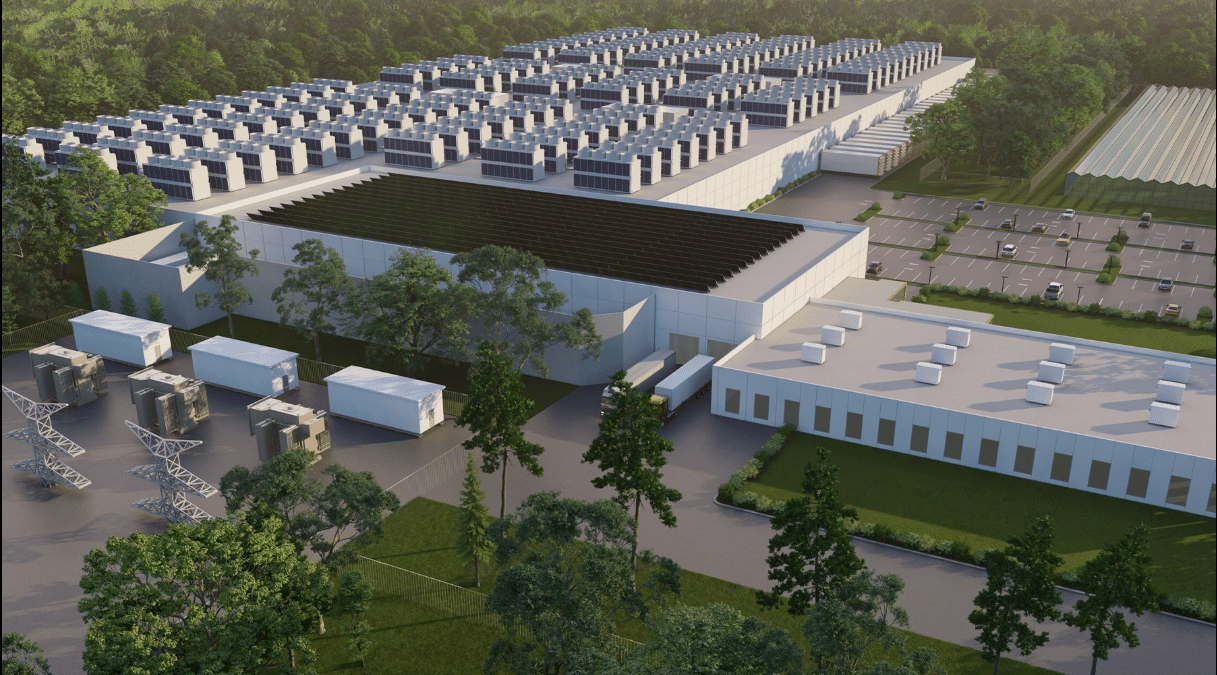
Montana emerging as potential hub for AI, cloud data centers
Montana is emerging as a potential hub in the growing national race to build artificial intelligence and cloud computing data centers, but the projects are also prompting debate over water use, electricity demand and local economic impacts.
Energy experts speaking on the “Voices of Montana” radio program said the state’s climate, power supply and infrastructure make it attractive for companies looking to build large data centers.
Bob Morris, Lance Energy Chair at Montana Tech University, said global investment in data centers is rapidly expanding and could reshape the economy.
“The U.S. currently spends about $1 trillion a year on data centers, and that could grow to $2 trillion,” Morris said. “This is comparable to the scale of the interstate highway system in terms of economic transformation.”
Much of that growth is driven by artificial intelligence, which Morris said is dramatically increasing productivity in fields such as software development.
Water use
Data centers require large amounts of electricity and cooling, raising concerns in some communities about potential impacts on power rates and water supplies.
However, Morris said newer data center designs significantly reduce water use, particularly in cooler climates like Montana.
He estimated that a proposed 200-megawatt data center in Butte would use about 16 million gallons of water annually — roughly the same as a 100-room hotel with a restaurant.
“Older facilities in hotter climates sometimes used millions of gallons per day,” Morris said. “But here, because of our cooler temperatures and newer cooling systems, the water demand is relatively small.”
Energy demand
Electricity demand remains a larger concern. Data centers can require hundreds of megawatts of power — equivalent to the electricity used by tens of thousands of homes.
Morris said Montana law provides safeguards to protect ratepayers. Any project requiring more than 5 megawatts must undergo review by the Montana Public Service Commission to demonstrate it will not negatively affect other customers.
Some developers are also proposing to build their own power generation.
One planned project near Broadview could produce up to 3 gigawatts of wind, solar and battery power to supply a data center expected to require up to 1 gigawatt of electricity.
Mark Lambrecht, CEO of the Montana Electric Cooperatives’ Association, said electric cooperatives have received inquiries from multiple data center developers in recent years.
Montana’s power supply is limited, he said, meaning many projects will likely need to bring new generation with them.
“The key from our perspective is making sure our members are not subsidizing these developments,” Lambrecht said.
Some utilities are proposing requirements that data centers pay for grid interconnections and build additional generation capacity to maintain reliability.
Economic benefits
Despite concerns, Morris said communities that host data centers have often seen significant economic benefits.
He pointed to Quincy, Washington, where tax revenue from data centers helped fund a new $90 million high school and new technical education programs.
“We should stay engaged and ask tough questions,” Morris said. “But there are a lot of potential benefits if we do this right.”
By: Tom Schultz
Voices of Montana Host


